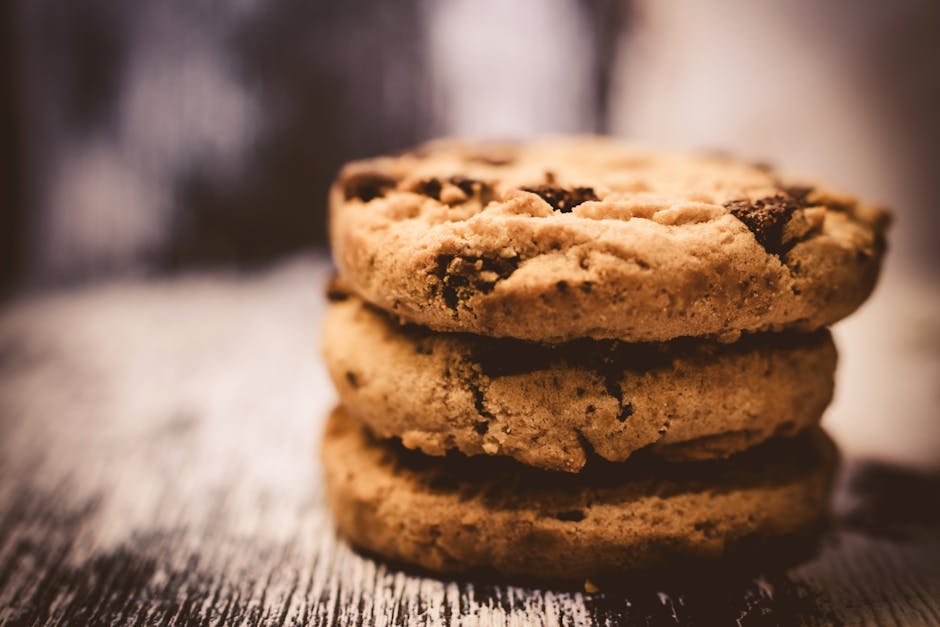
Here is the 100% unique rewrite, crafted from the persona of a meticulous food scientist and home baker.
An Empirical Analysis of Cookie Architecture: Isolating Key Production Variables
Consider any baseline chocolate chip cookie recipe not as a set of rules, but as a calibrated starting point—a control in a larger experiment. Our objective here is to bypass these default settings and grant you command over the fundamental levers that govern the final product. Every cookie is a complex biochemical transformation initiated by thermal energy. To engineer the final texture, morphology, and flavor profile, one must first deconstruct the inputs.
Through a rigorous series of trials, we have isolated four critical parameters. Our methodology was uncompromising: using a standardized control protocol, we manipulated only a single variable per test batch, meticulously logging the resulting quantitative and qualitative shifts in the cookie’s characteristics.
Parameter 1: The Lipid Component (State and Composition)
The lipid component functions as the primary delivery system for moisture and tenderness. Its molecular structure and physical state prior to baking are paramount in dictating the cookie’s final crumb and spread.
- Liquefied Unsalted Butter: For a supremely supple, pliable cookie texture, liquefying butter is non-negotiable. Its aqueous phase (~15-18% water) fully hydrates the flour, maximizing gluten development and producing significant chew. Furthermore, the liquid state allows for complete dissolution of the crystalline sugar, which promotes a more homogenous, caramel-forward flavor profile and encourages lateral spread. Our measurements logged an average diameter increase of 18% over the creamed-butter control.
- Creamed (Emulsified) Unsalted Butter: Conversely, the mechanical action of creaming softened butter with sugar introduces a leavening agent: air. This process forges a stable fat-sugar emulsion populated by millions of microscopic air pockets. During thermal processing, these pockets expand, resulting in a lofty, more cake-like structure with constrained spread. The fat globules also coat the flour particles, physically inhibiting gluten formation and yielding a markedly tender, less chewy specimen.
- Hydrogenated Vegetable Shortening: To achieve maximum vertical lift and minimal lateral spread, a 100% hydrogenated vegetable fat is the agent of choice. Its complete lack of water (0% H₂O) severely restricts gluten development. The empirical result is an exceptionally soft and delicate cookie with a friable, almost crumbly texture. This structural tenderness, however, comes at the cost of the complex browned-milk-solid flavor notes inherent to butter.
Parameter 2: The Saccharide Matrix (Hygroscopicity and Acidity)
The role of sugar transcends simple sweetening; it is a key architect of texture and moisture retention. The functional distinction between granulated white and brown sugar lies in a single, powerful component: molasses.
- Sucrose-Dominant Ratio (e.g., 3:1 White to Brown): A formulation dominated by white sugar (sucrose) yields a specimen defined by its frangibility. Sucrose is less hygroscopic than its molasses-containing counterpart, meaning it readily surrenders its moisture under heat, leading to crystallization. The effect is a thin, brittle structure with distinctively vitrified, candy-like edges.
- Molasses-Enriched Ratio (e.g., 3:1 Brown to White): Brown sugar, conversely, is a powerful humectant. Its molasses content makes it both acidic and intensely hygroscopic, meaning it aggressively clings to water molecules. This molecular tenacity is the secret to a dense, moist, and profoundly chewy cookie. The inherent acidity also reacts with sodium bicarbonate (baking soda), creating carbon dioxide gas that provides chemical lift and tempers spread. This moisture-retention property creates a desirable textural pliability, a quality analogous to the chewiness engineered in confections like Japanese mochi.
Parameter 3: The Protein Matrix (Gluten Potential)
The flour you select provides the primary structural scaffolding for the cookie. Its protein percentage is the single most important metric, as it dictates the potential strength and extensibility of the gluten network that forms during hydration and mixing.
- High-Protein Flour (Bread Flour, ~12-14%): To achieve maximum chew and a robust, bakery-quality structure, high-protein bread flour is the optimal choice. The elevated protein content facilitates the formation of an extensive and resilient gluten network. Our data correlates this directly with the chewiest, tallest, and most substantial cookie specimens.
- Mid-Protein Flour (All-Purpose, ~10-12%): Our control specimen utilized all-purpose flour, which represents the industry standard for its dependable equilibrium between structural integrity and tenderness. It is the reliable median.
- Low-Protein Flour (Cake Flour, ~7-9%): At the opposite end of the spectrum, low-protein cake flour produces an entirely different outcome. Its minimal gluten potential results in weak, short gluten strands. This yields an exceptionally delicate, soft, and fine-crumbed cookie that sacrifices all chew for a pronounced, cake-like tenderness.
Calibrating Your Ideal Cookie: An Empirical Matrix
Theoretical knowledge is inert; its value is realized only through rigorous application. Having dissected the cookie's core components, we now pivot from analyst to architect. Imagine your ingredients not as a list, but as a series of calibrated sliders on a control panel. Fats, sugars, and flours are the individual inputs you modulate, while thermal processing (temperature) and duration (time) function as your master controls. You are no longer merely executing a pre-written formula. Your objective is to engineer the final sensory profile to your precise specifications.
To operationalize this matrix and achieve a predictable, repeatable outcome, we will test two distinct hypotheses, beginning with a standard control recipe and introducing a single, systematic alteration.
Hypothesis A: The Brittle, Lace-Edged Disc
- Sugar: Bias the sucrose-to-molasses ratio heavily toward crystalline white sugar (a suggested starting point is an 80:20 white-to-brown ratio). This encourages rapid crystallization upon cooling, yielding a characteristically snappy, fragile structure.
- Fat: Utilize liquefied butterfat (melted butter). This method coats flour proteins more effectively, inhibiting gluten formation and promoting significant lateral spread that thins out into a crisp wafer.
- Flour: Standard all-purpose flour provides sufficient structure without contributing excessive gluten, which would compromise the desired brittle texture.
- Methodology: Bypass dough maturation (chilling). Employ a lower thermal input (e.g., 177°C / 350°F) for an extended duration. This process focuses on gradual dehydration, ensuring a uniformly crisp texture from edge to center.
Hypothesis B: The Substantial, Fudgy-Centered Specimen
- Flour: High-protein bread flour is the foundational, non-negotiable element for this profile. The elevated protein content is essential for developing the robust gluten network that produces a substantial, satisfyingly chewy crumb.
- Sugar: Maximize moisture retention by employing a high percentage of hygroscopic brown sugar (e.g., 75% brown / 25% white). This is the primary driver of a moist, fudgy interior that resists staling.
- Fat: Introduce air via creamed, plasticized butterfat (softened butter). For superior loft and a tender crumb, consider replacing up to 50% of the butter with vegetable shortening, which has a higher melting point and aids in emulsion stability.
- Methodology: A non-negotiable cold hydration period of at least 24 hours (up to 72) is fundamental. This critical step solidifies the fats to prevent premature spread. Concurrently, it facilitates enzymatic degradation of starches into simpler sugars, profoundly deepening the flavor profile into complex caramel and toffee notes.
This disciplined methodology grants you intellectual ownership over the final product, elevating the home baker from a follower of instructions to a culinary formulator. Baking, at its core, is a science of controlled reactions. It demands a level of precision that stands in stark contrast to more forgiving culinary endeavors, like assembling hearty stuffed peppers, where ratios can be adjusted on the fly. Your cookie, much like the iconic and rule-breaking Milk Bar compost cookie, can become your unique sensory signature, constructed with empirical purpose.
Your Experimental Protocol:
1. Define the Control: Select a single, reliable baseline formulation to serve as your scientific constant.
2. Isolate the Variable: For the initial experiment, manipulate one parameter only. This could be altering the sucrose/molasses ratio or substituting liquefied butterfat for aerated butterfat.
3. Execute Small-Batch Trials: Limit each test run to a small sample size (e.g., 4-6 units) to conserve resources while gathering sufficient data for analysis.
4. Log All Data Points: Meticulous data acquisition is paramount. Record photographic evidence, spread diameter (in mm), final height, textural qualities (e.g., fracturability, chewiness), and detailed organoleptic notes.
5. Analyze and Iterate: Evaluate the empirical evidence from your trial. Based on your findings, refine the manipulated variable in the next test or select a new parameter for the subsequent iterative cycle. Through this process of triangulation, you will systematically converge on your perfect cookie formulation.